2026 Best Ball Valve Types for Industrial Applications?
Ball valves are essential in industrial applications, providing reliable flow control and efficient performance. As industries evolve, understanding the best ball valve types becomes vital. In 2021, the global ball valve market was valued at over $14 billion and is projected to grow significantly. This growth indicates the increasing reliance on ball valves across various sectors.
In applications where precision and durability are crucial, selecting the right valve type plays a significant role. Factors like material, size, and design affect performance. A report by Grand View Research highlights that stainless steel ball valves are gaining popularity due to their corrosion resistance and longevity. However, not all ball valves perform equally under stress or varying temperatures.
As the market diversifies, challenges arise. A poorly chosen ball valve can lead to leaks or inefficient operations. The industry must continually evaluate valve performance and innovations. Understanding these dynamics will ensure that industries select the most effective ball valve types for their specific needs. The future of industrial flow control depends on these crucial decisions.

Overview of Ball Valves in Industrial Applications
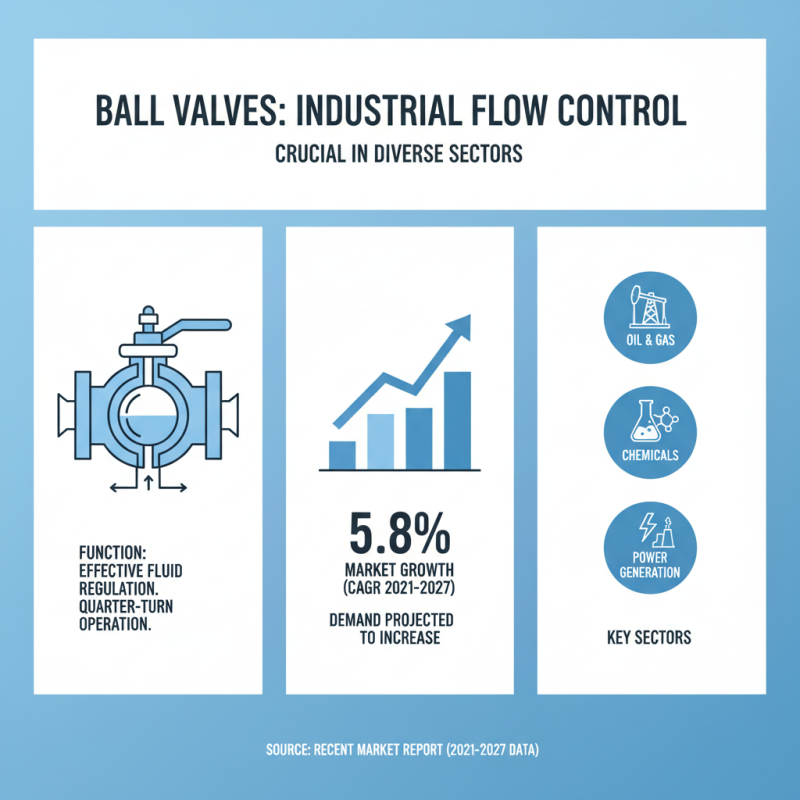
Ball valves are crucial in industrial applications, providing effective control over fluid flow. According to a recent market report, the demand for ball valves is projected to grow at a CAGR of 5.8% from 2021 to 2027. This data reflects their importance across various sectors, including oil and gas, chemicals, and power generation.
These valves work by rotating a ball with a hole in its center. When aligned with the flow, the valve opens. When perpendicular, it closes. This simple mechanism is reliable, but not without flaws. Over time, seals may wear, causing leaks. Regular maintenance is necessary to ensure optimal performance. In high-pressure environments, the choice of materials becomes critical. For instance, stainless steel is favored for its strength and corrosion resistance.
Another aspect to consider is the size. A poorly sized valve can lead to inefficiencies. An oversized valve may cause flow turbulence, while an undersized one can restrict flow. Both scenarios result in increased energy costs and potential system failures. Understanding these nuances is essential in selecting the right ball valve for a specific application.
Key Types of Ball Valves Used in Industry
Ball valves are essential in various industrial applications. Their design allows for quick shut-off and tight sealing. Understanding the different types can help in selecting the right valve for specific needs.
One popular type is the full port ball valve. It features a larger opening, allowing for better flow rates. This design is great for systems that require minimal pressure loss. Conversely, the reduced port ball valve has a smaller opening. It is suitable for applications where flow rates are less critical.
Tip: Always consider the medium flowing through the valve. For corrosive substances, materials matter. A mismatched material can lead to premature failure.
Another option is the trunnion ball valve. This type is anchored by a trunnion, allowing for easier handling of high pressures. They tend to be larger, making installation more challenging.
Tip: Installation may require professional help. Ensure that the valve aligns correctly with piping. Misalignment can cause leaks or reduced efficiency.
Each type serves a unique purpose. Assess the specific requirements of your application carefully. Don't overlook how minor variations can impact performance.
Features and Benefits of Each Ball Valve Type
In industrial applications, choosing the right ball valve type is crucial.
Floating ball valves are a popular choice. They are lighter and easier to maintain.
Their design allows the ball to float, ensuring a tight seal. This is especially important in high-pressure settings.
They have a simple structure, which makes them reliable.
Then, we have trunnion-mounted ball valves. These valves are built for larger systems.
Their robust design prevents the ball from floating, allowing for better handling of high pressures.
Trunnion-mounted valves often have lower torque requirements.
This means operators can manage them with less effort. However, they can be more complex to repair.
Another option is the multi-port ball valve. This type offers flexibility in flow direction.
It can connect multiple pipes or change flow paths easily. Its design can be a bit challenging for maintenance, and it may not fit all applications.
Each ball valve type has unique features and benefits. Choosing one requires careful consideration of needs and limitations.
Selection Criteria for Industrial Ball Valves
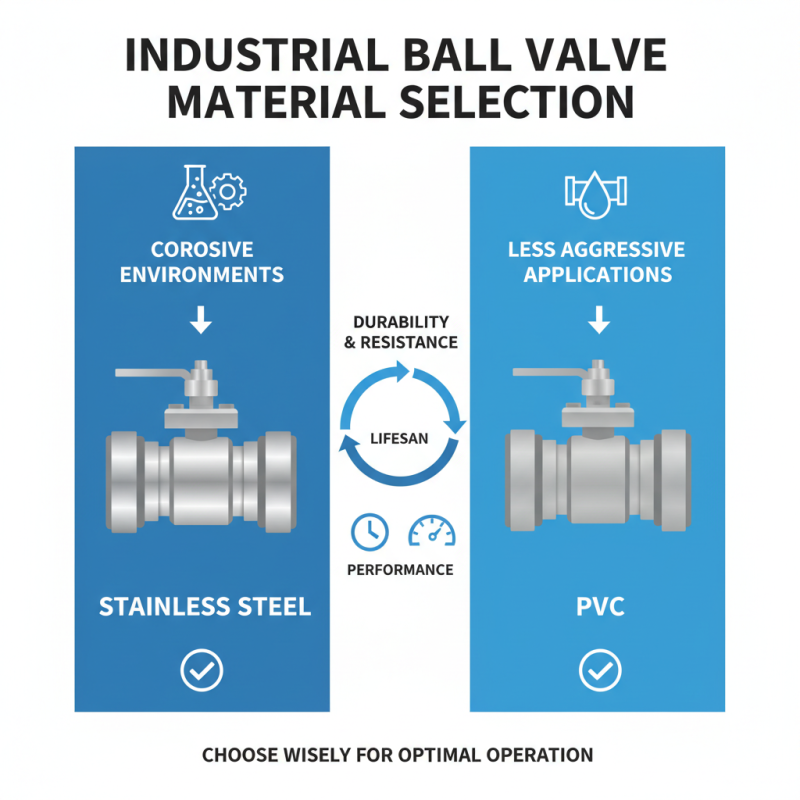
When selecting ball valves for industrial applications, several important criteria come into play. One vital factor is the valve material. Different materials offer varying levels of durability and resistance. Stainless steel might be best for corrosive environments, while PVC suits less aggressive applications. This choice affects the valve's lifespan and performance.
Another critical element is the valve size and type. A valve too large can cause flow inefficiencies. Conversely, a small valve may not handle the required pressure. Many overlook this, risking system performance and longevity. The installation method also matters. Flanged, threaded, or welded options all have their pros and cons. Understanding the application is key to making the right choice.
Lastly, consider the pressure and temperature ratings. Different applications demand different specifications. Sometimes, manufacturers do not clearly communicate these factors. It’s essential to verify against industry standards. Skipping this step can lead to potential failures. The selection process involves careful consideration and should align with specific operational needs.
Maintenance Practices for Optimal Ball Valve Performance
Maintaining ball valves is crucial for ensuring their optimal performance in industrial settings. Regular inspections can prevent unexpected failures. Look for wear, corrosion, and leaks. This helps identify issues early on. Clean the valve regularly to remove debris. Debris can obstruct flow and cause malfunctions.
Tips: Always check the actuator and seals. A well-functioning actuator ensures precise control. Seals are vital for preventing leaks. Schedule maintenance during downtime to avoid disruptions.
Over time, internal components can wear out. If you notice irregularities, consider a thorough inspection. Ignoring small problems can lead to bigger failures later. Keep track of maintenance records. This information is invaluable for future checks. Consistency is key in maintaining ball valve efficiency.
2026 Best Ball Valve Types for Industrial Applications
This chart illustrates the distribution of various ball valve types used in industrial applications, highlighting their performance and maintenance requirements. The data reflects a survey of industry professionals regarding the most effective ball valve types for optimal performance and ease of maintenance.