Top Brass Fittings for Global Buyers Where to Find the Best?
Finding the best brass fittings can be a challenge for global buyers. The market is saturated with options, but not all suppliers meet quality standards. It is crucial to consider factors such as material durability and manufacturing processes. Reliable brass fittings ensure longevity and reduce maintenance costs.
In recent years, the demand for high-quality brass fittings has surged. Buyers are more discerning and value trustworthy suppliers. Many find it difficult to navigate the vast landscape of choices. Poor-quality fittings can lead to leaks and inefficiencies. This highlights the importance of thorough research and expert advice when selecting suppliers.
Identifying reputable manufacturers is essential. Look for those with experience and a solid track record. Quality certifications also play a vital role in determining credibility. Engaging with industry experts can provide valuable insights. The aim is to strike a balance between cost and quality while ensuring that your selection meets all necessary standards.

Top Brass Fittings: Understanding Their Importance in Various Industries
Brass fittings are critical components in numerous industries, including plumbing, HVAC, and automotive. According to a recent industry report, the global brass fittings market is expected to grow at a CAGR of 5.4% from 2023 to 2030. This growth reflects their vital role in delivering reliable performance under pressure.
In plumbing systems, brass fittings ensure long-lasting connections. Their corrosion resistance and mechanical strength are essential in preventing leaks. A study published in the Journal of Mechanical Engineering highlights that systems using brass fittings endure pressure fluctuations better than those with alternative materials.
Despite their advantages, not all brass fittings are created equal. Variability in manufacturing processes can lead to inconsistencies. A mismatch of quality can result in system failures. Buyers should prioritize certifications and standards when sourcing fittings to mitigate this risk. A rigorous quality check could prevent costly disruptions.
Common Applications of Brass Fittings in Residential and Industrial Settings
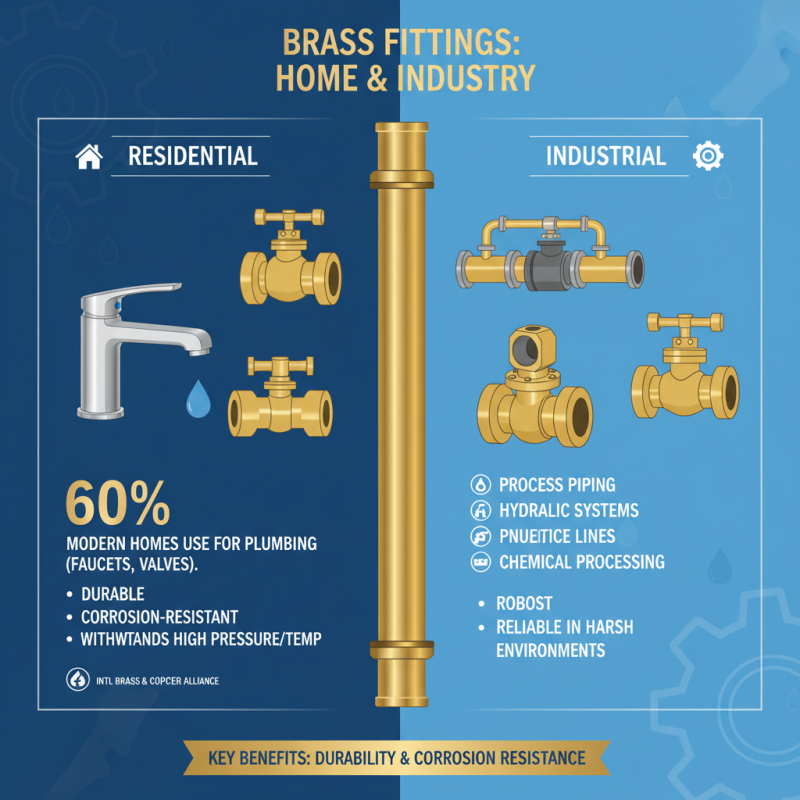
Brass fittings are widely used in both residential and industrial applications, owing to their durability and corrosion resistance. In homes, brass fittings are typically found in plumbing systems, including faucets, valves, and connectors. According to a report by the International Brass and Copper Alliance, about 60% of modern homes utilize brass fittings for their plumbing needs. This is largely due to the material’s strength, which can withstand high pressure and temperature.
In industrial settings, brass fittings are essential in multiple applications, such as HVAC systems and pneumatic tools. They serve as critical components for maintaining fluid flow and gas connections. The Global Market Insights report indicates that the demand for brass fittings in the industrial sector is projected to grow by 4% annually through 2025. Unfortunately, some manufacturers may overlook the importance of quality control, leading to fittings that don't meet industry standards. This has caused occasional failures that can disrupt operations, highlighting the need for thorough inspections.
Proper installation and maintenance of brass fittings are vital for their performance. Regular checks can prevent leaks and ensure longevity. However, it is common for users to neglect these checks, resulting in costly repairs. The inconsistency in maintenance practices across different sectors can be a reflection of knowledge gaps, indicating that more training is needed.
Key Features to Consider When Selecting Brass Fittings for Quality Assurance
When selecting brass fittings, quality assurance is paramount. Buyers should consider several key features that impact performance. The durability of the material is essential. Brass fittings must resist corrosion and wear. According to a recent industry report, fittings made from high-grade brass can last up to 15 years in harsh environments.
Another crucial aspect is the fitting's pressure rating. Ensuring a fitting can handle the required pressure is vital. For example, fittings rated for higher pressures can prevent leaks and failures. An analysis indicated that approximately 30% of plumbing issues arise from using substandard fittings. This emphasizes the importance of selecting properly rated components.
Furthermore, accuracy in dimensions and thread types is non-negotiable. Misaligned fittings can lead to system inefficiencies. Industry studies have shown that even minor discrepancies can reduce flow efficiency by up to 20%. Buyers often overlook these details, leading to costly repairs. It’s essential to ensure that the brass fittings are compatible with your specific requirements for optimal performance.
Where to Source High-Quality Brass Fittings: A Global Overview
Finding high-quality brass fittings on a global scale requires careful consideration. The global brass fittings market was valued at approximately $8.5 billion in 2022 and is projected to grow by 5% annually. A significant portion of this growth stems from the increasing demand in plumbing and HVAC systems.
When sourcing brass fittings, buyers should focus on reputable manufacturers known for their durability and precision. Many industries require brass fittings that can withstand high pressures and corrosive environments. Certifications like ISO 9001 and ASTM standards indicate adherence to quality and safety norms. However, identifying reliable suppliers can be challenging. Variations in production quality may lead to significant discrepancies in performance.
Trade shows and online platforms can be effective for finding potential suppliers. Yet, one must be cautious of companies that seem too good to be true. Quality control failures can happen even among established manufacturers. Researching customer reviews and requesting samples can help mitigate risks. Ultimately, balancing cost with quality remains a continuous challenge for buyers in this dynamic market.
Global Brass Fittings Market Overview
Evaluating Suppliers: Tips for Global Buyers in the Brass Fitting Market
When evaluating suppliers in the brass fitting market, buyers must focus on several key factors. Quality assurance is paramount. According to recent industry data, around 65% of buyers emphasize product durability and reliability in their purchasing decisions. Buyers should look for suppliers who provide certifications and quality control measures. This ensures that the brass fittings meet international standards, reducing the risk of future damage or failures.
Beyond product quality, understanding the supply chain is crucial. Suppliers with efficient logistics and transparent practices are more likely to deliver on time. Research shows that delays in supply chains can lead to significant cost increases—up to 20% in some projects. Buyers should assess the supplier's ability to manage inventory and logistics effectively. In an era of global trade, overlooking these details could hinder project success.
Communication plays a vital role in supplier relationships. Clear, consistent communication helps address any issues that may arise during the procurement process. Studies indicate that 75% of successful partnerships stem from open dialogue and established trust. Recognizing the importance of this element can lead to better results and enhanced collaboration over time.