
China Top Stainless Steel Pipe Fittings Suppliers?
Choosing reliable Stainless Steel Pipe Fittings suppliers in China requires more than comparing catalog prices. Product photos can look similar, yet performance may differ inside the fitting. Material grade, wall thickness, surface finish, and welding quality need careful review. A dependable supplier should provide clear mill certificates, inspection records, and traceability documents. This information helps buyers confirm whether the fitting matches the project specification.
Look closely at manufacturing capability. A serious factory usually explains its forming, polishing, heat-treatment, and testing processes. It should also describe how workers control dimensions, thread accuracy, pressure resistance, and corrosion protection. Samples can reveal practical details, including uneven polishing, rough welds, or poorly marked sizes. Small defects matter.
Communication matters too.
Experienced buyers often request drawings, tolerance data, packaging photographs, and pre-shipment inspection options. They should also confirm applicable standards, such as ASTM, ASME, EN, or other project requirements. However, supplier rankings can change quickly. A company praised last year may face new quality or delivery problems today. That point deserves reflection.
This guide evaluates China’s leading Stainless Steel Pipe Fittings suppliers through product consistency, technical support, production capacity, export experience, and customer reliability. It does not treat the lowest quotation as the best choice. Instead, it considers evidence that can be checked, compared, and documented. Buyers should still verify certificates, audit facilities when possible, and test samples before placing large orders. Reliable sourcing takes time, but it can prevent costly leaks, delays, and rework.
What Are Stainless Steel Pipe Fittings?
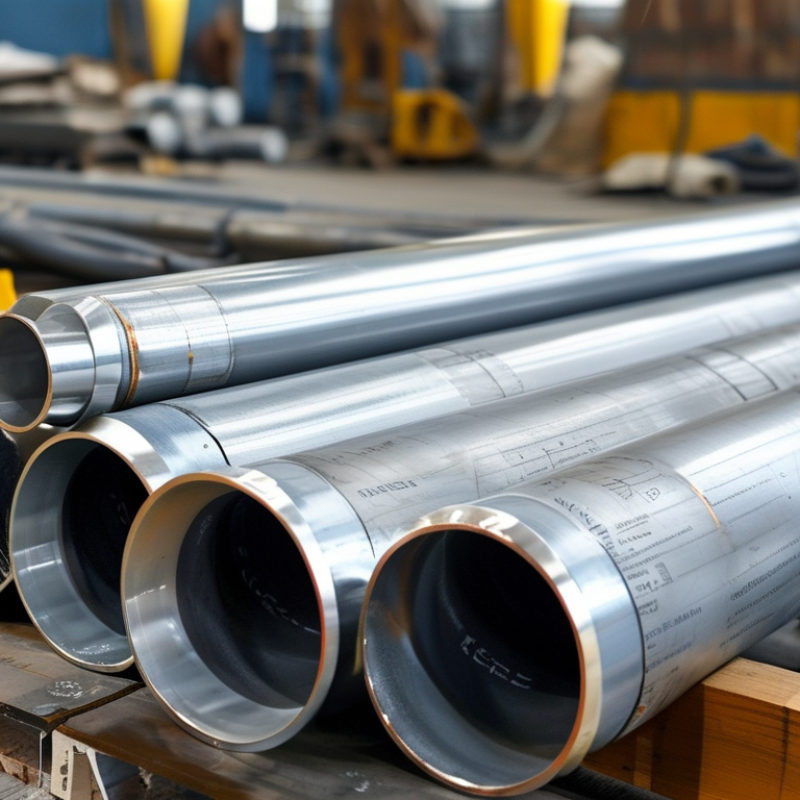
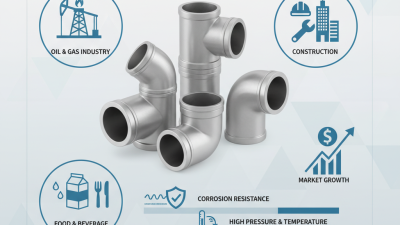
Stainless steel pipe fittings are precision components that connect, redirect, control, or close piping systems. Common types include elbows, tees, reducers, couplings, caps, and flanges. They are usually manufactured from austenitic stainless steel, such as 304 or 316 grades. Molybdenum improves resistance to chlorides, while nickel supports corrosion resistance and forming performance.
The 2023 World Stainless Association statistics reported about 58.4 million tonnes of crude stainless steel production worldwide. This scale supports a broad fittings supply chain, especially in China. However, production volume does not prove quality. ASME B16.9 defines dimensions and tolerances for several factory-made butt-welding fittings. ASTM A403 covers wrought austenitic stainless steel fittings. These references help buyers check wall thickness, heat treatment, marking, and material certificates. A polished surface may look convincing. It can still hide weak weld control or incorrect chemistry.
Tips: Match the fitting grade to the fluid, temperature, and chloride exposure. Ask for mill certificates, pressure-test records, and dimensional inspection reports. Confirm whether the fitting is seamless or welded. Measure the actual wall thickness, not only the catalogue value. I have found this step easy to overlook. That mistake can become expensive during installation. Suppliers should also explain manufacturing tolerances clearly, because “standard size” does not always mean identical performance across factories.
China Top Stainless Steel Pipe Fittings Suppliers? - What Are Stainless Steel Pipe Fittings?
Stainless steel pipe fittings are components used to connect, redirect, branch, terminate, or adapt stainless steel piping systems. The table below summarizes common fitting types, materials, standards, dimensions, and selection factors for technical comparison.
| Fitting Type | Primary Function | Common Configurations | Typical Stainless Grades | Common Standards | Connection Method | Key Selection Consideration |
|---|---|---|---|---|---|---|
| Elbow | Changes the direction of flow in a piping system. | 45°, 90°, and 180°; short-radius and long-radius designs. | 304/304L, 316/316L, 321 | ASME B16.9; EN 10253-4; ASTM A403 | Butt welding; some sizes are available with socket-weld or threaded ends. | Choose the angle, radius, wall thickness, and corrosion-resistant grade required for the service. |
| Equal Tee | Creates a 90° branch with the same nominal size as the run pipe. | Equal-size run and branch; seamless or welded construction. | 304/304L, 316/316L, 321 | ASME B16.9; EN 10253-4; ASTM A403 | Butt welding | Verify branch reinforcement, wall thickness, flow direction, and dimensional compatibility. |
| Reducing Tee | Provides a branch connection smaller than the main run. | Concentric branch reduction; multiple run-to-branch size combinations. | 304/304L, 316/316L, 321 | ASME B16.9; EN 10253-4; ASTM A403 | Butt welding | Select the branch size according to required flow capacity and downstream equipment connections. |
| Concentric Reducer | Reduces pipe diameter while keeping both centerlines aligned. | Large end and small end share the same centerline. | 304/304L, 316/316L, 321 | ASME B16.9; EN 10253-4; ASTM A403 | Butt welding | Commonly used in vertical piping and liquid service where alignment is important. |
| Eccentric Reducer | Reduces pipe diameter while keeping one side of the pipe level. | Offset centerlines; flat-side-up or flat-side-down installation. | 304/304L, 316/316L, 321 | ASME B16.9; EN 10253-4; ASTM A403 | Butt welding | Often selected for horizontal liquid lines to help prevent air pockets or liquid accumulation. |
| Cap | Closes the end of a pipe or fitting. | Ellipsoidal, dished, or hemispherical end profiles. | 304/304L, 316/316L, 321 | ASME B16.9; EN 10253-4; ASTM A403 | Butt welding | Check end preparation, wall thickness, pressure requirements, and internal cleanliness. |
| Coupling | Joins two pipe sections in a straight line. | Full coupling, half coupling, reducing coupling. | 304/304L, 316/316L | ASME B16.11; ASTM A182; ASTM A479 | Socket welding or threaded connection | Confirm pressure class, thread type, bore size, and compatibility with the pipe schedule. |
| Union | Allows a pipe connection to be assembled or disconnected without rotating the pipes. | Three-piece body with a sealing interface. | 304/304L, 316/316L | ASME B16.11; ASTM A182 | Threaded or socket-weld ends | Select the sealing design and pressure rating based on maintenance needs and operating conditions. |
| Flange | Creates a detachable, bolted connection between pipes, valves, pumps, or equipment. | Weld neck, slip-on, blind, socket-weld, threaded, and lap-joint types. | 304/304L, 316/316L, 321 | ASME B16.5 for NPS 1/2–24; ASME B16.47 for larger sizes; ASTM A182 | Bolted connection with gasket; welded or threaded attachment | Match nominal size, pressure class, facing, bolt pattern, gasket, and material grade. |
| Cross | Provides four branch connections from a common intersection. | Equal or reducing configurations. | 304/304L, 316/316L | ASME B16.11; ASTM A182 | Socket welding or threaded connection | Use only where the flow layout and stress analysis support a four-way intersection. |
304 and 304L are widely used general-purpose austenitic stainless steels. 316 and 316L provide improved resistance to chloride and many chemical environments because of their molybdenum content. The “L” grades have lower carbon content and are commonly preferred for welded applications.
Butt-welding fittings covered by ASME B16.9 generally use NPS dimensions from 1/2 through 48, while forged socket-weld and threaded fittings covered by ASME B16.11 commonly cover smaller nominal sizes. Always confirm the specific product range and pressure-temperature rating.
Important purchasing information includes material certificates, heat numbers, dimensional inspection, wall-thickness verification, surface finish, non-destructive testing when specified, and compliance with the required design code.
Related Posts
-
Top 10 Stainless Steel Pipe Fittings You Need to Know?
-
Why Choose Stainless Steel Pipe Fittings for Your Plumbing Needs?
-

Mastering Stainless Steel Pipe Fittings: A Comprehensive Tutorial on Selection and Application
-

What is Stainless Steel Pipe Fittings and Their Applications in Plumbing
-
10 Best Stainless Steel Pipe Fittings for All Your Needs?
-
What is Stainless Steel Pipe Fittings and Their Uses?