Why Choose Brass Fittings for Global Sourcing?

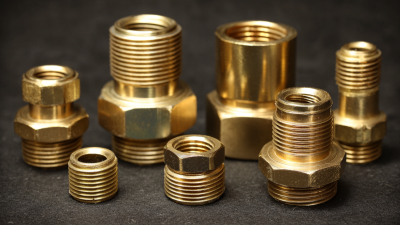
Global sourcing is not just a price exercise. Buyers must weigh material consistency, machining performance, delivery reliability, and the cost of defects. Brass Fittings remain a practical choice for many fluid and plumbing applications because copper-zinc alloys are machinable, corrosion-resistant in suitable conditions, and widely available in established supply chains. The U.S. Geological Survey’s Mineral Commodity Summaries 2024 reported global copper mine production of about 22 million metric tons in 2023. That figure does not measure brass-fitting capacity, but it shows the scale of the copper supply base behind many brass products.

For sourcing teams, the details matter. A fitting that looks identical in a catalogue may differ in alloy grade, dimensions, thread accuracy, or finish. Those differences can surface only after installation. ISO 7-1 and ISO 228-1, for example, define distinct pipe-thread systems; confirming the required standard before ordering can prevent avoidable compatibility problems. Ask suppliers for material certificates, inspection records, and clear product specifications. Verify that documents match the actual shipment, not merely a sample.

Brass is not a perfect answer. Its performance depends on alloy composition, water chemistry, operating conditions, and manufacturing quality. The Copper Development Association’s technical resources describe how brass properties vary by alloy, a useful reminder that “brass” alone is not a complete specification. A small trial order can reveal issues a spreadsheet misses. When buyers compare suppliers on verified data—not price alone—they can make more defensible decisions about quality, risk, and long-term value.
Why Choose Brass Fittings for Global Sourcing?

Brass Fittings: Composition, Types, and Key Features

Why Choose Brass Fittings for Global Sourcing?

Brass Fittings: Composition, Types, and Key Features

Brass fittings combine copper and zinc, usually with small alloying additions. Copper improves corrosion resistance and thermal conductivity. Zinc supports strength, machinability, and cost control. Many common alloys contain roughly 60% copper and 40% zinc, but the exact ratio varies by application. The U.S. Geological Survey reported about 22 million metric tons of mined copper and 12 million metric tons of mined zinc in 2023. This broad raw-material base supports reliable international sourcing, although availability still depends on alloy grade and regional capacity.

Common types include threaded, compression, flare, solder-joint, and push-fit fittings. Threaded fittings suit removable pipe connections. Compression fittings use a nut and ferrule, helping installers work without welding or heat. Flare designs perform well in fuel and hydraulic applications when correctly matched. Key features include pressure resistance, dimensional stability, and clean machining. Standards such as ASME B16.15 and ASME B16.18 help buyers compare dimensions and performance. Yet standards do not remove every risk. Plating quality, thread accuracy, and hidden porosity still need inspection.

Tips: Request the alloy designation, pressure rating, surface treatment, and test records. Ask for samples before placing a large order. Check threads with calibrated gauges. A fitting may look perfect but leak after repeated thermal cycling. The International Copper Study Group’s market reports also show how copper supply changes can affect long-term purchasing costs. Build a buffer into forecasts. That small step is often overlooked.

Why Choose Brass Fittings for Global Sourcing?

Brass fittings combine corrosion resistance, machinability, strength, and broad international availability. Copper content varies by alloy and influences forming, machining, and service performance.

How to read the chart: Values show the midpoint of the specified copper-content range for common UNS brass alloys used in plumbing, industrial, and marine applications. Zinc makes up most of the remaining composition, while small additions such as lead or iron may improve machinability or strength.
Sourcing note: Alloy selection should be matched with the required pressure rating, connection standard, corrosion environment, potable-water requirements, and applicable ASTM or regional specifications.

Performance Benefits in Diverse Operating Conditions

Brass fittings earn trust because they perform steadily across changing operating conditions. They handle water, compressed air, fuel systems, and moderate chemical exposure with practical reliability. Their copper and zinc composition provides useful strength without making installation unnecessarily difficult.

Temperature changes can cause expansion, contraction, and repeated stress at joints. Brass generally tolerates these cycles better than many brittle alternatives. It also resists surface corrosion in ordinary indoor and outdoor environments. In mildly saline locations, however, protection and alloy selection become more important. Water chemistry can accelerate dezincification, especially in warm systems. That risk deserves attention.

Field inspections often reveal that fitting performance depends on more than material alone. Correct thread engagement, sealing methods, pressure ratings, and torque control all matter. Thread damage is common. A clean fitting and a properly aligned pipe can prevent small leaks that later become expensive disruptions. Brass also supports dependable machining, which helps maintain consistent dimensions during large-volume sourcing. Buyers should verify alloy composition, applicable standards, temperature limits, and documentation before approval. For potable water, confirm local requirements and restricted-material rules. Assuming every brass fitting behaves identically is an easy mistake. Even experienced teams sometimes overlook water chemistry or installation conditions. Reliable sourcing requires technical checks, not appearance-based decisions.

Common Applications Across Global Industries

Why Choose Brass Fittings for Global Sourcing?

Brass fittings support water distribution, irrigation, HVAC, compressed air, and industrial process lines. Their machinability enables accurate threads and repeatable dimensions during large production runs. In supplier audits, consistent sealing often matters more than appearance. Brass also tolerates frequent assembly and maintenance. The material remains practical.

Water infrastructure is a major application. The UN World Water Development Report 2024 states that agriculture represents about 70% of global freshwater withdrawals. This creates demand for dependable connectors in pumps, drip systems, valves, and filtration equipment.

In buildings, brass fittings serve drinking-water networks, radiators, heat exchangers, and cooling systems. The International Energy Agency reports that buildings consume about 30% of global final energy. Reliable HVAC connections can support maintenance and reduce avoidable leakage.

Industrial users apply brass fittings in pneumatic equipment, instrumentation, and low-pressure utility lines. Their corrosion resistance is useful in humid workshops and coastal facilities, although it is not universal. Water chemistry, dezincification risk, pressure ratings, and local standards still require careful review. A common sourcing mistake is comparing unit prices alone. Traceability, alloy verification, thread inspection, and documented testing can prevent costly field failures. The choice is not automatic. Supplier qualification should match the application, climate, and regulatory requirements of the destination market.

Quality Standards and Compliance in International Markets

When sourcing brass fittings internationally, compliance begins with the destination market, not the factory brochure. Each country may require different thread profiles, pressure ratings, lead limits, and documentation. A fitting can look perfect and still fail an installation audit. Experienced buyers request material certificates, batch numbers, dimensional reports, and current test records. Small details matter.

Quality checks should follow a clear inspection plan. Inspectors can verify thread gauges, wall thickness, surface finish, and product marking before shipment. Pressure testing should match the declared service conditions, including water temperature and working pressure. For drinking-water applications, verify the required sanitary approval and chemical composition limits. ISO 9001 certification supports process control, but it does not replace product testing. That distinction is often missed.

Reliable suppliers keep traceability from raw brass billets to packed cartons. They should explain how nonconforming parts are isolated, recorded, and corrected. Independent pre-shipment inspection can reveal mixed batches or incorrect thread standards. Field audits sometimes find complete paperwork but unclear carton markings. That weakness deserves attention. Do not accept a certificate simply because it carries a stamp. Check its scope, date, issuing body, and connection to the actual batch. Standards change, and supplier explanations can lag behind them. Careful review is slower, but usually cheaper than a field failure.

Why Choose Brass Fittings for Global Sourcing? - Quality Standards and Compliance in International Markets

Sourcing Dimension Relevant Standard or Regulation What It Covers Practical Quality Requirement Evidence to Request
Threaded fitting design ASME B16.15 Cast copper-alloy threaded fittings for pressure applications, including dimensions, tolerances, and pressure–temperature ratings. Confirm that the fitting type, nominal size, thread form, dimensions, and rating match the applicable design standard. Dimensional inspection report, technical drawing, material certificate, and pressure-test record.
Solder-joint fitting design ASME B16.18 Cast copper-alloy solder-joint pressure fittings used with copper tube. Verify socket dimensions, end preparation, wall thickness, and compatibility with the specified tube and joining method. Inspection report, approved drawing, alloy declaration, and production-batch traceability.
European connection dimensions EN 1254 series Copper and copper-alloy fittings for use with copper, stainless-steel, plastic, and multilayer pipe systems, depending on the applicable part. Select the correct EN 1254 part for the joint type, tube material, and intended installation system. Declaration of conformity, dimensional records, joint-performance test results, and batch identification.
Pipe-thread compatibility ISO 7-1 and ISO 228-1 ISO 7-1 covers pipe threads intended to make pressure-tight joints on the threads; ISO 228-1 covers parallel pipe threads where the seal is not made on the thread. Do not mix sealing-thread and non-sealing-thread designs. Confirm thread designation, gauge control, and sealing method. Thread-gauge records, thread inspection results, drawings, and sample-fit verification.
Material composition Applicable alloy specification; commonly ASTM B16/B16M for free-cutting brass bar, rod, and shapes Defines chemical composition and mechanical requirements for specified copper-alloy product forms. The alloy grade must be stated clearly and verified by heat or batch. “Brass” alone is not a sufficient material specification. Mill test certificate, heat number, chemical analysis, and independent alloy verification when required.
Pressure integrity Applicable product standard and purchaser specification Leak resistance, pressure rating, wall integrity, and performance under the specified service conditions. Use a documented hydrostatic or pneumatic test procedure with defined pressure, duration, acceptance criteria, and safety controls. Pressure-test report, calibrated equipment records, sampling plan, and nonconformance records.
Potable-water suitability NSF/ANSI/CAN 61 and applicable local drinking-water requirements Health-effects requirements for products and materials that contact drinking water or drinking-water chemicals. Confirm that the exact alloy, coating, size range, and end use are covered by the required certification or approval. Current conformity certificate, scope statement, material formulation, and test laboratory report.
Lead-content control in the United States U.S. Safe Drinking Water Act, Section 1417 For covered drinking-water products, “lead-free” generally means a weighted average of not more than 0.25% lead across wetted surfaces, subject to the regulation and applicable exclusions. Use an alloy specifically qualified for the intended potable-water market and verify the calculation or certification basis. Lead-content declaration, laboratory analysis, certification record, and product-scope confirmation.
Chemical restrictions in the European Union REACH Regulation (EC) No. 1907/2006 and RoHS Directive 2011/65/EU where applicable REACH addresses substances of very high concern and supply-chain communication; RoHS restricts certain substances in covered electrical and electronic equipment. Determine whether the finished fitting and its application fall within the relevant legal scope; do not treat RoHS as universally applicable to every plumbing fitting. REACH article declaration, SVHC communication statement, RoHS declaration where applicable, and material composition data.
Corrosion resistance Application-specific material and water-chemistry requirements Resistance to dezincification, stress corrosion, galvanic interaction, and service-environment attack. Assess alloy selection, water chemistry, temperature, chlorides, joining metals, and installation conditions before approving the design. Alloy designation, dezincification-resistance evidence where specified, compatibility assessment, and environmental test data.
Manufacturing consistency ISO 9001 quality-management framework Process control, documented procedures, corrective action, inspection planning, and continual improvement. A management-system certificate supports process confidence but does not replace product testing or specification compliance. Valid certificate, audit scope, control plan, inspection records, calibration certificates, and corrective-action history.
Global shipment and traceability Purchase specification and international trade documentation Product identification, packaging, quantity control, origin information, and linkage between shipment lots and production records. Every carton and batch should be traceable to the approved drawing, material heat, inspection records, and shipment documents. Packing list, commercial invoice, certificate of origin where required, lot labels, inspection release, and traceability log.

Note: The applicable standard depends on the fitting type, connection method, material, pressure class, fluid, installation location, and destination-market regulations. Confirm the latest edition and legal scope before purchase.

Factors to Evaluate When Sourcing Brass Fittings Globally

Global sourcing of brass fittings requires more than comparing unit prices. Alloy composition, pressure ratings, thread accuracy, and corrosion resistance should match the application. USGS Mineral Commodity Summaries 2024 reported global copper mine production at about 22 million metric tons in 2023. This matters because copper and zinc prices can quickly change fitting costs. Ask suppliers for recent material certificates, heat numbers, and third-party test results. A polished surface proves little.

Factory capability also deserves close review. Check forging equipment, machining tolerance, leak testing, and inspection records. ISO 9001 certification can support process consistency, but it does not guarantee every shipment. The International Copper Study Group projected refined copper usage above 26 million metric tons in 2024, showing continued pressure on raw-material supply. Confirm production capacity before placing seasonal orders. A cheap quote may become expensive after rework, delays, and customs handling. I have found that landed cost is often less obvious than the invoice.

Tips: Request samples from different production lots. Test threads, sealing faces, and pressure performance independently. Compare alloy declarations with applicable safety requirements in the destination market. Review packaging against moisture, impact, and mixed-carton risks. Keep a written inspection plan. It feels slow, but rushed approvals create avoidable disputes. Also examine payment terms, lead times, transport routes, and contingency stock. Sustainability data should be specific, not decorative language; ask how scrap is controlled and whether recycled content is traceable.